

Care guide for vintage sportswear: preserve your collection
TL;DR:
- Proper care of vintage sportswear involves using specialized tools, gentle hand-washing with cool water and specialist detergent, and flat drying on acid-free tissue to prevent damage. UK collectors must account for higher humidity and environmental factors that accelerate fibre degradation, making meticulous storage and slow restoration essential. DIY repairs are feasible for minor issues, but expert help is necessary for significant damage to preserve both value and integrity.
Imagine pulling out a vintage Chicago Bulls jersey you paid serious money for, only to find the numbers cracking, the fabric yellowed, and the colour washed out beyond recognition. It’s a genuinely painful moment for any collector. Authentic American sportswear carries real cultural weight and financial value, but these garments are fragile by nature. Decades of wear, storage, and transportation across the Atlantic leave them vulnerable. This guide walks you through every stage of proper care, from assembling the right tools to tackling tricky restorations, so your collection stays vibrant and retains its worth for years to come.
Table of Contents
- What you need to care for vintage sportswear
- How to clean vintage sportswear safely
- Drying and storage techniques for lasting quality
- Restoration and troubleshooting common vintage wear issues
- Why meticulous care is essential for UK collectors
- Explore authentic vintage sportswear and expert care tools
- Frequently asked questions
Key Takeaways
| Point | Details |
|---|---|
| Preparation is crucial | Gathering the right tools and assessing garment condition prevents accidental damage. |
| Gentle cleaning only | Hand-wash methods and gradual humidification protect fragile vintage sportswear fibres. |
| Smart storage boosts longevity | Use acid-free materials and avoid moisture extremes for lasting colour and shape. |
| DIY fixes need care | Some repairs can be done at home, but delicate patches and prints often require specialist help. |
| UK climate requires extra attention | Humidity and imported fabrics create unique challenges for British collectors. |
What you need to care for vintage sportswear
Once you understand the risks, gathering the right equipment is your critical first step.
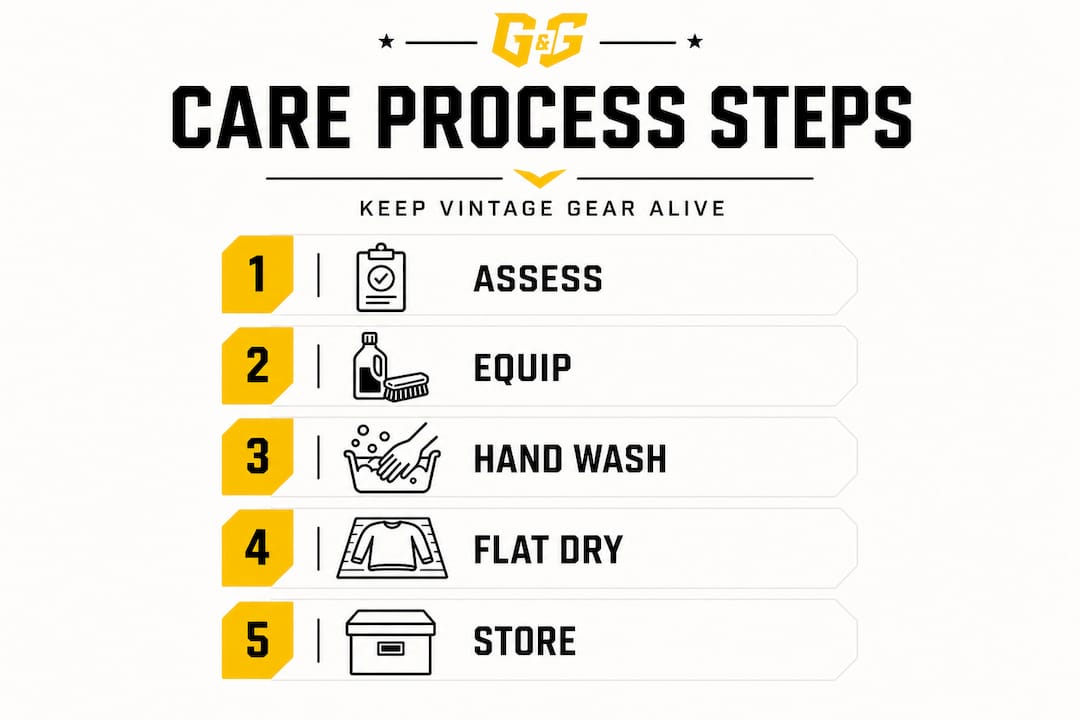
Before you touch a single garment, you need to be properly equipped. Vintage fabrics are not the same as the jerseys you’d throw in a modern washing machine. Aged polyester mesh, cracked flocked numbers, and delicate embroidered patches all respond very differently to cleaning agents and physical handling. Getting your toolkit right makes the difference between preserving a gem and destroying it.
Essential tools and materials
Here is a practical checklist of what you should have ready before you start any care routine:
- Soft-bristle brushes (natural hair if possible) for gently loosening surface dirt without abrading fibres
- Specialist textile detergent formulated for delicate or vintage fabrics, not standard laundry products
- Acid-free tissue paper for wrapping stored garments and preventing chemical transfer from packaging materials
- A cool-mist humidifier for carefully rehydrating stiff or brittle textiles before handling
- Clean white cotton towels for blotting excess moisture without transferring dye
- Mesh laundry bags for any machine-assisted rinsing at very low temperatures
- pH-neutral soap as a spot-treatment option for localised staining
Before you read more about step-by-step fabric care, it is worth assessing each garment individually. Look for loose stitching, print deterioration, faded areas, and any signs of mould or mildew. Document what you find. If you acquired a piece recently, revisiting our vintage sportswear buying guide will help you understand what to look for in terms of fabric composition and garment age.
| Tool | Purpose | Priority level |
|---|---|---|
| Specialist detergent | Safe cleaning without fibre damage | Essential |
| Acid-free tissue | Chemical-free storage wrapping | Essential |
| Soft-bristle brush | Surface dirt removal | Essential |
| Cool-mist humidifier | Gentle rehydration of brittle textiles | Recommended |
| Mesh laundry bag | Controlled rinsing support | Optional |
Professional conservation requires gradual and careful monitoring of humidification to prevent shock to degraded fibres. The same principle applies to your vintage NBA warm-up jacket or 1980s MLB cap.
Pro Tip: Never substitute ordinary household detergents, even gentle ones, for specialist textile cleaners. Standard formulas contain optical brighteners and enzyme compounds that actively break down the aged fibres found in vintage sportswear, particularly in screen-printed numbers and heat-applied patches.
How to clean vintage sportswear safely
With tools prepped, you’re ready to take the right care steps without risking your garment’s integrity.
Cleaning vintage sportswear is not a task you rush. Each garment deserves your full attention. Batch-washing vintage pieces, even in the gentlest cycle, is a fast route to disaster. Fabric stress compounds when multiple items tumble together, and there is no way to monitor each one carefully.
Step-by-step hand-wash method
- Fill a clean basin with cool water. Never use warm or hot water on vintage fabrics. Heat accelerates colour bleed and can warp synthetic fibres permanently.
- Add a small amount of specialist detergent. Less is always more. A teaspoon per basin is typically sufficient. Swirl gently to dissolve before placing the garment in.
- Submerge the garment slowly. Do not plunge it in. Lower it in gradually and press it softly beneath the surface. Avoid wringing or scrubbing at any point.
- Allow it to soak for five to ten minutes. Let the detergent do the work. For lightly soiled pieces, five minutes is plenty.
- Rinse with cool, clean water. Drain the basin, refill with clean water, and gently press the garment to release soap. Repeat twice.
- Press out excess water with a white cotton towel. Lay the garment flat onto the towel, fold the towel over, and press firmly. Never twist or wring.
Understanding the fabric care role in preserving textile integrity supports every decision in this process. Moisture management is particularly crucial.
“Gradual, monitored humidification prevents shock to fibres, which is critical during restoration.” This principle from textile conservation experts applies directly to how you introduce any moisture to vintage garments during cleaning.
This is especially relevant when dealing with stiff or brittle areas. Lightly misting these sections with a cool-mist humidifier before submerging helps condition the fibre gradually rather than shocking it with full immersion.
| Cleaning method | Risk level | Recommended use |
|---|---|---|
| Hand wash (cool water) | Low | All vintage pieces |
| Machine wash (cold, gentle) | Medium | Robust modern vintage only |
| Dry cleaning | Medium to high | Depends on chemicals used |
| Spot clean only | Very low | Fragile or heavily embellished pieces |
For NFL jerseys specifically, our detailed NFL jersey cleaning guide covers material-specific advice that goes deeper into mesh fabrics and tackle twill lettering. If you are still building your collection and want to understand what makes certain pieces worth protecting, browse through must-have American sportswear to appreciate the quality of what you’re caring for.
Pro Tip: Clean one garment at a time, every single time. Never batch-wash vintage pieces. The attention each garment needs during the process cannot be divided, and the risk of accidental damage increases dramatically when you’re managing multiple items at once.
Drying and storage techniques for lasting quality
Finishing your cleaning, how you dry and store makes the real difference in your collection’s longevity.
The drying stage is where many collectors make costly mistakes. Hanging a heavy vintage jersey while wet places enormous strain on shoulder seams and neck bands. The weight of water pulling downward can stretch fabric irreversibly, distorting a garment that was in perfect shape before you cleaned it.
Drying best practices
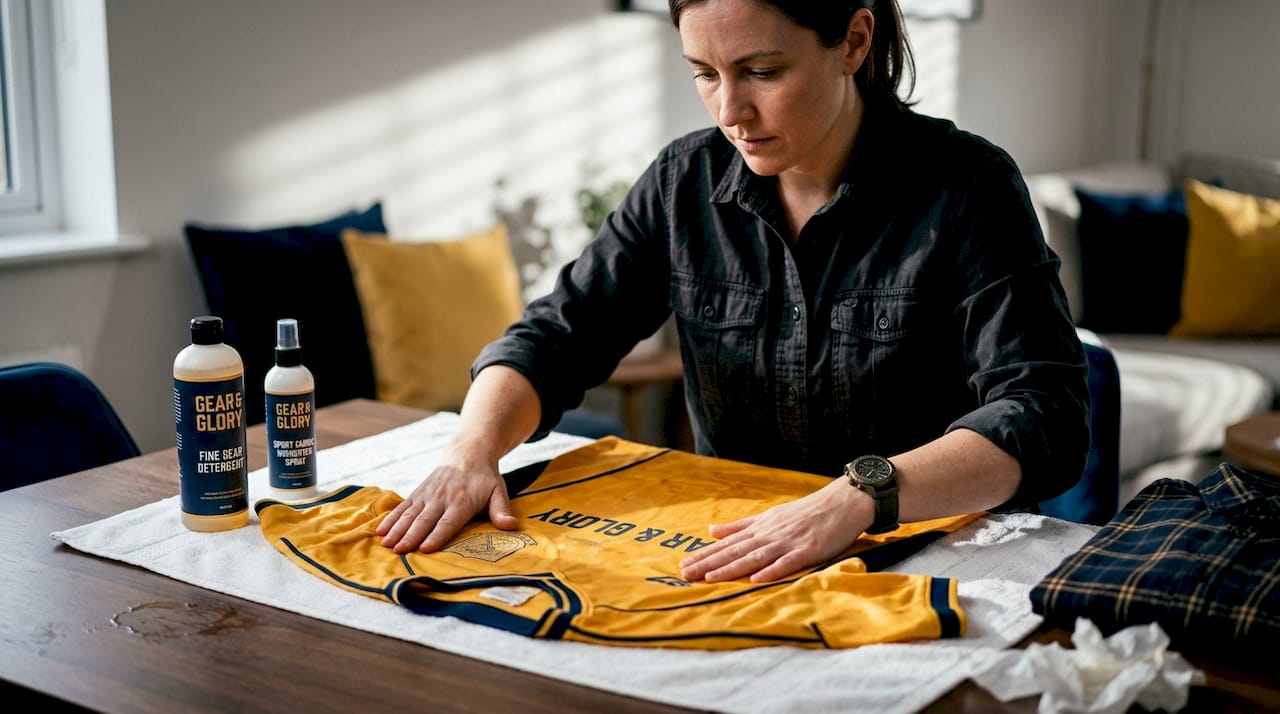
Flat drying is the gold standard for vintage sportswear. After pressing out excess moisture with a towel, lay the garment flat on a clean, dry surface away from direct sunlight and heat sources. Reshape it gently by hand to its original dimensions while still damp. A mesh drying rack allows airflow from beneath, which speeds up drying without the risks of hanging.
Air drying is acceptable for lighter, more robust garments, but always use a padded hanger if you must hang, and support the body of the garment rather than relying solely on the shoulders.
Avoid these storage and drying mistakes at all costs:
- Storing in plastic bags or airtight containers, which trap moisture and accelerate mould growth
- Folding along print lines or embroidered areas, which causes cracking over time
- Keeping garments in direct sunlight or near radiators, which bleaches colour and dries out fibres
- Cramped storage that compresses garments together and causes permanent creasing
- Using wire hangers that can distort shoulder shapes over months of storage
Humidity extremes, if not carefully managed, can lead to splitting and loss of material in aged textiles. This is a real concern in the UK, where damp conditions in homes and storage spaces are common.
Practising sustainable habits with your garments also matters. Proper storage extends the life of pieces that would otherwise end up damaged or discarded. Simple measures like good storage reduce fashion waste significantly and keep genuinely irreplaceable items in circulation.
| Storage method | Recommended | Notes |
|---|---|---|
| Flat with acid-free tissue | Yes | Best for fragile or heavily printed pieces |
| Padded hanger, cool wardrobe | Yes | Good for robust jerseys without heavy prints |
| Plastic storage bag | No | Traps moisture, causes mould |
| Vacuum storage bag | No | Compresses and crushes fibres |
| Direct display under spotlights | No | UV exposure bleaches colour rapidly |
For guidance specific to ice hockey apparel, our vintage NHL jersey storage tips addresses the unique challenges of thick woollen and polyester blends. If you are at the stage of expanding your collection strategically, our piece on building a jersey collection is well worth your time.
Pro Tip: If you display garments on a wall or in a frame, rotate them every three to four months. Prolonged static display under any light source accelerates colour fading and places ongoing stress on the same areas of fabric. Rotation gives fibres time to recover and distributes wear more evenly.
Restoration and troubleshooting common vintage wear issues
Even with top-tier care, age and use bring challenges. Here is how to spot and fix issues before they escalate.
Minor restoration is well within reach for most collectors if you approach it carefully and know your limits. The key distinction is between repairs you can manage at home with basic tools and those that genuinely require a professional textile conservator.
DIY repairs you can attempt safely
- Loose stitching on seams or hems. Use a fine needle and thread that closely matches the original colour. Make small, tight stitches and secure both ends with a knot. Work from the inside of the garment where possible.
- Minor pilling on fabric surfaces. Use a fabric shaver set to its lowest setting and work in short, careful strokes. Test on an inconspicuous area first.
- Light staining on jersey mesh. Apply a tiny amount of specialist spot cleaner to a cotton bud, work it gently into the stain in circular motions, then blot dry. Do not rub.
- Dust accumulation on embroidery. Use a soft-bristle brush in the direction of the stitch to lift dust without pulling threads loose.
For more ambitious projects involving cracked tackle twill or damaged screen prints, our retro NFL jersey restoration article covers specific approaches.
Signs you need professional help
- Significant colour loss across large sections of the garment
- Fragile areas where fabric has thinned to the point of translucency
- Mould or mildew that has penetrated beyond the surface
- Detached or crumbling heat-applied graphics
- Structural tears longer than a few centimetres
Following fabric repair steps designed for lasting textile projects gives you a clear framework for minor work, but knowing when to stop is equally important.
Professional humidification is performed gradually, and quick interventions can trigger further deterioration. The same logic applies to all restoration work. Rushing a repair is far more likely to cause permanent damage than taking the time to do it properly or seeking specialist help.
Pro Tip: Never iron directly over prints, patches, or embroidered areas. The heat melts adhesives, distorts thread, and can cause prints to crack instantly or transfer to the iron. If pressing is necessary, always use a pressing cloth on a very low setting and work around embellishments, never over them.
Why meticulous care is essential for UK collectors
There is a perspective rarely discussed in standard care guides, and it matters a great deal to those of us sourcing and storing American sportswear on British soil.
UK collectors face a specific set of challenges that American guides simply do not account for. Our climate is fundamentally different. The average British home carries higher ambient humidity than a dry climate like much of the American Midwest or Southwest, where many of these garments were originally made and stored. That humidity difference means collections stored in UK attics, spare rooms, or even wardrobes are exposed to conditions that accelerate mould growth and fibre degradation faster than collectors might expect.
American sportswear, particularly pieces from the 1970s through to the early 1990s, often used dye processes and fabric blends that were not designed with long-term preservation in mind. These were garments made to be worn, washed repeatedly, and replaced. Collectors who treat them with that original assumption in mind, and wash them like everyday clothing, are inadvertently accelerating their decline. The value of understanding iconic vintage jersey culture is partly in recognising that what you’re holding is genuinely irreplaceable.
Seasoned collectors who have been at this for years will tell you the same thing: patience is the most underrated skill in this hobby. The collectors who lose pieces are rarely careless people. They are people who were in a hurry. A rushed clean, a careless fold, a patch ironed over too quickly. These are the moments that cost real money and genuine heartbreak.
“A collection is only as strong as its weakest cared-for piece.” That idea sounds simple, but it changes how you approach every garment. One poorly stored item can transfer mould spores to neighbouring pieces. One aggressive cleaning can set a precedent that slowly degrades your entire approach.
Pro Tip: Keep a care logbook for your collection. Note what you did, when you did it, what products you used, and what results you observed. Over time, this record becomes invaluable for refining your routine and identifying patterns, such as which garments need more frequent attention or which cleaning products perform best on certain fabric types.
Explore authentic vintage sportswear and expert care tools
If this guide has inspired you to take better care of what you already own, it might also be the right moment to think about what deserves a place alongside it.

At Gear & Glory, we source and stock authentic American sportswear for UK collectors who understand the difference between genuine vintage and imitation. From rare NFL and NBA jerseys to vintage MLB caps and NHL throwbacks, every piece in our catalogue is chosen for its authenticity and cultural significance. We are based in Market Deeping and built specifically for collectors who take this seriously. Browse our full range to find pieces worth preserving, and explore care resources on our blog to keep every garment in your collection at its best.
Frequently asked questions
Should I use a humidifier for restoring vintage jerseys?
Only use gradual, carefully monitored humidification. Sudden moisture shocks fibres and can cause splitting or irreversible material loss, so always introduce moisture slowly and in short intervals.
How often should I clean vintage sportswear?
Clean only when absolutely necessary to minimise stress on aged fibres. Inspect each garment first for visible staining or odour before deciding whether cleaning is actually required.
What is the safest way to store rare sportswear?
Flat storage wrapped in acid-free tissue within a cool, dry environment offers the best protection. Humidity extremes cause material loss in aged textiles, so temperature and moisture control are non-negotiable.
Can I repair vintage patches or numbers at home?
Small seam repairs with matching thread are manageable at home, but for prints, patches, or embroidered numbers, consult a textile specialist to avoid causing damage that cannot be reversed.
Is it OK to use ordinary laundry detergent?
Standard detergents contain enzymes and optical brighteners that actively degrade vintage fabrics. Always use a specialist formula designed for delicate or aged textiles instead.