

How to layer your NHL jersey for UK weather and style
TL;DR:
- British weather challenges NHL fans in the UK to layer effectively by combining moisture-wicking base layers, thin mid layers, and weatherproof outer shells. Proper layering ensures comfort, adaptability, and a stylish, intentional fan look in changing conditions. Investing in quality fabrics and thoughtful outfit-building helps fans enjoy their passion regardless of unpredictable weather.
Wearing your NHL jersey in the UK feels brilliant until the drizzle starts, the wind picks up, and you realise your outfit is either soaking through or suffocating you on the Tube. British weather plays by its own rules, and that creates a real challenge for fans who want to rep their team with the same confidence and authenticity they see rinkside in North America. This guide solves the layering puzzle by walking you through every level of your outfit, from the fabric closest to your skin all the way to the outer shell, so you stay warm, dry, and sharp no matter the forecast.
Table of Contents
- Understanding the basics: Why layering matters for NHL fans in the UK
- What to wear under and over your NHL jersey: Essential layers explained
- Step-by-step guide: Building your NHL jersey outfit for UK conditions
- Common mistakes and how to avoid them: Layering pitfalls for UK NHL fans
- Hard-won lessons: The real secret to mastering NHL jersey layering in Britain
- Get the look: Shop US sports streetwear and accessories for UK fans
- Frequently asked questions
Key Takeaways
| Point | Details |
|---|---|
| Choose the right base layer | Synthetic or merino wool fibres help manage sweat and keep you warm and dry. |
| Avoid excessive bulk | Layer thin, flexible items under your NHL jersey to stay comfortable and stylish. |
| Adjust for British weather | Always have a weatherproof outer shell to handle sudden rain or wind. |
| Fit is critical | Pick a jersey size that works with your layers and allows you to move freely. |
Understanding the basics: Why layering matters for NHL fans in the UK
The UK is not Toronto in January, but it is not exactly mild either. British weather is wet, changeable, and often cold enough to make a single jersey feel wildly insufficient. The real problem is not just the cold. It is the combination of cold mornings, unpredictable rain, and then overheated pub interiors that demands a thoughtful approach to what you wear.
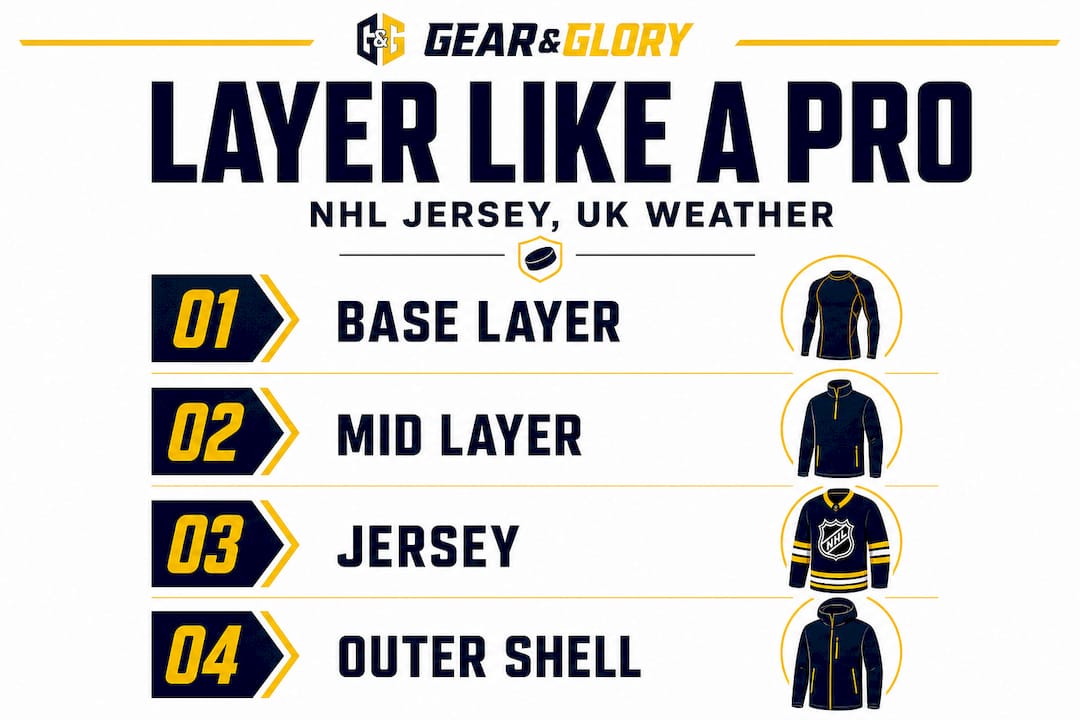
Many fans make the mistake of throwing on a thick layer and hoping for the best. The result is usually a bulky silhouette that looks uncomfortable and feels worse. Poor layering choices lead to sweating during the walk to the venue, freezing outside, and then overheating once you are inside. Understanding NHL apparel explained in the context of British conditions is genuinely different from just buying a jersey and wearing it straight.
A proper layering system works in three stages. The base layer sits directly on your skin and manages moisture. The mid layer provides insulation and warmth. The outer layer protects against wind and rain. Each layer has a specific job, and confusing those jobs is where most fans go wrong.
| Common mistake | Best practice |
|---|---|
| Wearing cotton as a base layer | Use moisture-wicking polyester or merino wool |
| Hoodie under the jersey | Wear hoodies as outer layers only |
| Ignoring fit when layering | Size up for jersey comfort over mid layers |
| No outer shell in UK weather | Always carry a packable waterproof |
| Overdressing indoors | Choose removable, packable layers |
Top layering challenges for British NHL fans include:
- Managing the shift between cold outdoor temperatures and warm indoor venues
- Avoiding bulk that makes the jersey look ill-fitting
- Finding thin mid layers that provide real warmth
- Staying dry during the inevitable British downpour
- Keeping the overall outfit looking intentional and styled rather than random
The growth of NHL popularity in the UK means more fans than ever are thinking seriously about how to wear their gear, not just on the sofa, but out in the world. Getting the layering right is what separates a fan who looks the part from one who just looks cold.
What to wear under and over your NHL jersey: Essential layers explained
Every successful layering system starts at the skin and builds outward. Avoid cotton as a base layer because it retains moisture and can leave you feeling cold and damp once you start moving. Cotton absorbs sweat but does not pull it away from the body, which means you will feel clammy the moment you step outside or get moving.

Instead, reach for synthetic fabrics like polyester or nylon, or go for merino wool if your budget allows. Merino is particularly impressive for UK conditions. It regulates temperature in both cold and warm environments, resists odour, and stays comfortable against the skin for long periods. A lightweight merino base layer is probably the best single investment you can make for game day comfort.
Mid layers are where most fans overthink things. Thin, low-bulk options like a thermal shirt or a slim-fit fleece are ideal because they add insulation without creating a thick silhouette under the jersey. The goal is warmth without restriction. A good mid layer should allow you to lift your arms freely, sit down comfortably, and move without feeling like you are wearing armour.
Outer layers are for wearing over the jersey, full stop. A hoodie or zip-up fleece worn over the jersey gives you warmth and style, and critically, it can be removed when you move indoors. A hoodie worn under a hockey jersey causes too much bulk and restricts movement, and it also destroys the clean silhouette the jersey is designed to create.
| Layer | Recommended fabrics | Pros | Cons |
|---|---|---|---|
| Base layer | Polyester, merino wool | Moisture-wicking, temperature regulating | Merino can be expensive |
| Mid layer | Lightweight fleece, thermal knit | Warmth without bulk | Limited wind protection |
| Outer layer (over jersey) | Softshell, waterproof shell | Weather protection, removable | Can feel stiff in cheaper options |
Here is how to build your layering system from scratch:
- Start with a moisture-wicking base layer in a slim fit
- Add a thin thermal top or lightweight fleece as a mid layer
- Put your NHL jersey on over the mid layer
- Add a weatherproof outer shell or hoodie over the jersey for outdoor conditions
- Accessorise with a cap, team beanie, or scarf for extra warmth and fan identity
Pro Tip: When buying your jersey, check the NHL jersey fit guide and consider sizing up by one size if you plan to wear a mid layer underneath regularly. A jersey that sits too snugly over a thermal will pull at the shoulders and lose its shape.
Step-by-step guide: Building your NHL jersey outfit for UK conditions
Now that you understand the layers, here is how to put the whole system together for different UK scenarios. The key is to think about your whole day, not just the match or viewing session itself. You have the commute, the walk to the pub, the indoor warmth, and the cold return journey to consider.
- Start with your base. Pull on a slim-fit polyester or merino thermal top. Keep it close-fitting so it does not bunch under your jersey.
- Add your mid layer if needed. On colder days, a thin fleece or thermal shirt goes on next. Skip this entirely on milder autumn days.
- Put your jersey on. This is the star of the outfit. Make sure it sits cleanly over your layers without pulling or bunching.
- Choose your outer layer. A packable waterproof shell or a zip-up hoodie worn over the jersey gives you warmth and the ability to quickly strip off a layer when you move indoors.
- Accessorise for identity and warmth. A team cap, a beanie in your team colours, or a simple scarf adds warmth and reinforces your fan identity. These small additions also help when the temperature drops unexpectedly.
- Footwear matters more than people think. Clean trainers or chunky boots complete the streetwear look and keep you comfortable on long walks.
For a practical game day look outdoors, the ideal combination is a moisture-wicking base layer, a thin insulating mid layer, and a weather-protective outer shell. This classic three-layer approach is trusted in outdoor pursuits for good reason. It is adaptable, practical, and it works.
Remember: Never skip the outer shell in the UK, even if the morning looks promising. A packable waterproof takes up almost no space in a bag and can save your entire outfit from a soaking. British weather changes without notice, and a wet jersey is both uncomfortable and unflattering.
For pub viewing, you can usually drop the outer shell once you are inside and wear the jersey over a clean base layer. This transition from outdoors to indoors is exactly where a thoughtful layering system earns its keep. Check out the NHL streetwear guide for more ideas on how to adapt the look for casual social settings.
Pro Tip: Pack a lightweight, packable bag with you so you can stow your outer layer when moving between outdoor and indoor settings. Carrying a bulky jacket in your arms all night disrupts the whole aesthetic. A small backpack or a bag that fits the look keeps things tidy.
For more on choosing NHL fan gear that suits both the climate and your personal style, it is worth doing a bit of research before investing in new pieces.
Common mistakes and how to avoid them: Layering pitfalls for UK NHL fans
Even fans who understand the theory make practical errors when they are actually getting dressed in a hurry. Here are the most common mistakes and the straightforward fixes.
Common layering mistakes to avoid:
- Wearing cotton anywhere in the system. Cotton retains moisture and causes cold, damp discomfort. Replace every cotton layer with a synthetic or natural performance fabric.
- Stuffing a hoodie under the jersey. It creates bulk, restricts your range of movement, and makes the jersey look two sizes too small.
- Ignoring your jersey sizing. If your jersey is already tight with no layers, adding any base layer at all will feel uncomfortable.
- Treating the jersey as a coat. In the UK, the jersey is a mid-layer item in terms of warmth. You need a proper outer layer on top.
- Over-layering indoors. Turning up to a heated pub in three layers means sweating through everything within minutes.
- Neglecting waterproofing. A waterproof shell or jacket is not optional in the UK. It is essential kit.
For casual streetwear styling, NHL jerseys worn over hoodies or tops can look brilliant, but only if the sizing and fit work together so the whole outfit reads as intentional rather than haphazard. If the jersey is tight over a hoodie, the look collapses. The solution is simple: size the jersey for layering from the start.
Pro Tip: UK weather shifts constantly, even across a single day. Build your outfit for the coldest part of the day and plan to remove layers as you move indoors. The fans who stay comfortable all day are the ones who dress for flexibility, not just for the first hour. Have a look at trendy NFL apparel styling for crossover ideas on handling American sportswear in British conditions.
Hard-won lessons: The real secret to mastering NHL jersey layering in Britain
Here is a perspective most layering guides skip entirely: dressing for British conditions in American sportswear is not about recreating an NHL arena atmosphere. It is about mobility, packability, and expressing who you are as a fan in a country where the weather does not care about your loyalty to the Pittsburgh Penguins.
The fans we see making this work consistently are not the ones with the heaviest jackets or the most layers. They are the ones who have thought about the full journey. The bus ride, the walk in the wind, the heated pub, the late-night walk home. Each stage demands something slightly different, and the beauty of a proper layering system is that it responds to all of them without requiring a full outfit change.
There is a saying we come back to often: you will never regret a good base layer, but you will always regret a soggy hoodie. It sounds obvious until you are standing outside a pub in November, dripping wet, wearing a soaked cotton jumper under your jersey and wondering why you are miserable.
Beyond comfort, there is also the question of identity. Wearing your NHL gear in the UK is an act of cultural enthusiasm. It says something about you. That is worth getting right. A clean, well-fitted jersey over a slim base layer and under a sharp outer shell looks intentional. It looks like a choice. That matters more than people admit.
There is also something worth saying about the growing culture of collecting NHL sportswear in the UK. Fans here are building genuine wardrobes around their love of the sport. That means thinking about layering pieces as investments in a broader style system, not just one-off purchases. Buy quality base layers. Find outer shells that complement your jerseys. Build the wardrobe properly and it will serve you across every season.
Get the look: Shop US sports streetwear and accessories for UK fans
If you have read this far, you are serious about getting your layering system right. That starts with the jersey itself and the pieces you build around it.

At Gear & Glory, we stock authentic NHL jerseys, American sports gear, and the streetwear essentials you need to complete the look. Whether you are after vintage US sportswear to add character to your outfit, a fresh set of US sports caps to top off your game day style, or quality Nike and Adidas streetwear to layer beneath or over your jersey, we have got you covered. Browse the full range and find pieces that work as hard as the layering system you have just built.
Frequently asked questions
What is the best material to wear under an NHL jersey for UK weather?
Moisture-wicking fabrics like polyester or merino wool are ideal because they manage sweat and regulate body temperature in the changing conditions typical of British weather.
Should I wear a hoodie under or over my NHL jersey?
Always wear a hoodie as an outer layer over the jersey. Under-jersey hoodies cause bulk and restrict movement, and they ruin the clean fit of the jersey.
How do I choose the right size NHL jersey for layering?
Consider sizing up by one size from your usual fit, so the jersey sits comfortably over a base layer or thin mid layer without pulling at the shoulders or chest.
What is the ideal layering system for outdoor NHL events in the UK?
The best approach is base layer plus mid layer plus a weather-protective outer shell worn over the jersey, giving you flexibility to adapt as you move between outdoor and indoor settings.