

How to store classic jerseys and protect your memorabilia
TL;DR:
- Proper storage of sports jerseys involves using acid-free materials, climate control, and careful handling to prevent deterioration. Techniques include folding with tissue, hanging on padded hangers, or framing with UV-protective glass, depending on their value and display needs. Consistent climate, humidity, and light management are crucial for preserving the integrity and cultural significance of collectible jerseys long-term.
A classic jersey pulled from a wardrobe only to reveal yellowed fabric, a cracked print, or shoulder dimples gouged in by wire hangers is a moment every serious collector dreads. These are not just garments; they are physical records of unforgettable sporting moments, and poor storage quietly destroys them. Whether you own a vintage NBA throwback, a match-worn NFL piece, or a rare NHL jersey from the 1990s, the difference between preservation and deterioration comes down to a handful of deliberate decisions made long before the damage shows.
Table of Contents
- What you need before storing your jerseys
- Step-by-step: Secure folding, hanging, and display methods
- Expert solutions and museum-grade care
- Troubleshooting and common mistakes to avoid
- Why most collectors underestimate storage—what really protects your jerseys
- Protect and celebrate your sports memorabilia with Gear & Glory
- Frequently asked questions
Key Takeaways
| Point | Details |
|---|---|
| Choose storage method wisely | Match the method to value, space, and display needs—framing, hanging, or flat storing each has pros and cons. |
| Use archival materials | Padded hangers, acid-free tissue, and UV protection are essential to prevent physical and light-based damage. |
| Avoid humidity and sunlight | Keep jerseys out of direct light and high-moisture areas to prevent fading and mildew. |
| Check stored items regularly | Inspect for mildew, yellowing, or odours every few months and refresh moisture packs as needed. |
What you need before storing your jerseys
Before you touch a single jersey, you need the right materials in place. Think of this stage as setting up a controlled environment rather than simply finding a spare shelf. The enemy of any textile collectible is a combination of moisture, ultraviolet light, acidic materials, and physical stress, and each one can do lasting harm over months and years without you ever noticing.
Padded or wide hangers prevent the shoulder stretching and pressure points that wire hangers cause. This sounds minor, but a jersey hung on a thin wire hanger for five years will develop permanent distortion at the shoulder seams. Similarly, acid-free tissue paper and archive-safe boxes neutralise the acidic compounds that standard cardboard and plastics release over time, and those compounds are responsible for the yellowing you see on older pieces. UK clubs like Wolverhampton Wanderers rely on acid-free paper, archival boxes, and climate control as standard practice for their museum-grade shirt preservation.
Here is a quick checklist of what every collector should have to hand:
- Padded or wide hangers for any jerseys kept on display
- Acid-free tissue paper for folding and layering
- Archive-safe boxes for long-term flat storage
- UV-blocking glass or acrylic for framed displays
- Silica gel packs to absorb moisture inside boxes
- Cotton gloves for handling signed or match-worn pieces
- A climate-stable room away from radiators, damp walls, and windows
| Material | Role | Essential? |
|---|---|---|
| Padded hangers | Prevents shoulder stretching | Yes |
| Acid-free tissue | Stops yellowing and print adhesion | Yes |
| Archive boxes | Long-term flat storage | Yes |
| Silica gel packs | Controls moisture | Yes |
| UV-blocking glass | Prevents fading in displays | For framed pieces |
| Cotton gloves | Protects signed items from skin oils | For rare pieces |
Avoid standard polythene bags, non-archival cardboard boxes, and wire hangers entirely. These materials either trap humidity or introduce acids that break down fibres and inks. If you want to brush up on preparation before putting anything away, our jersey cleaning tips walk through how to clean safely before storage. Understanding sustainable clothing care principles also reinforces why breathable, natural materials outperform plastics for long-term textile health.
Pro Tip: Silica gel packs are inexpensive and reusable. Place two or three inside every storage box and replace or recharge them every three to four months to keep humidity consistently low.
Step-by-step: Secure folding, hanging, and display methods
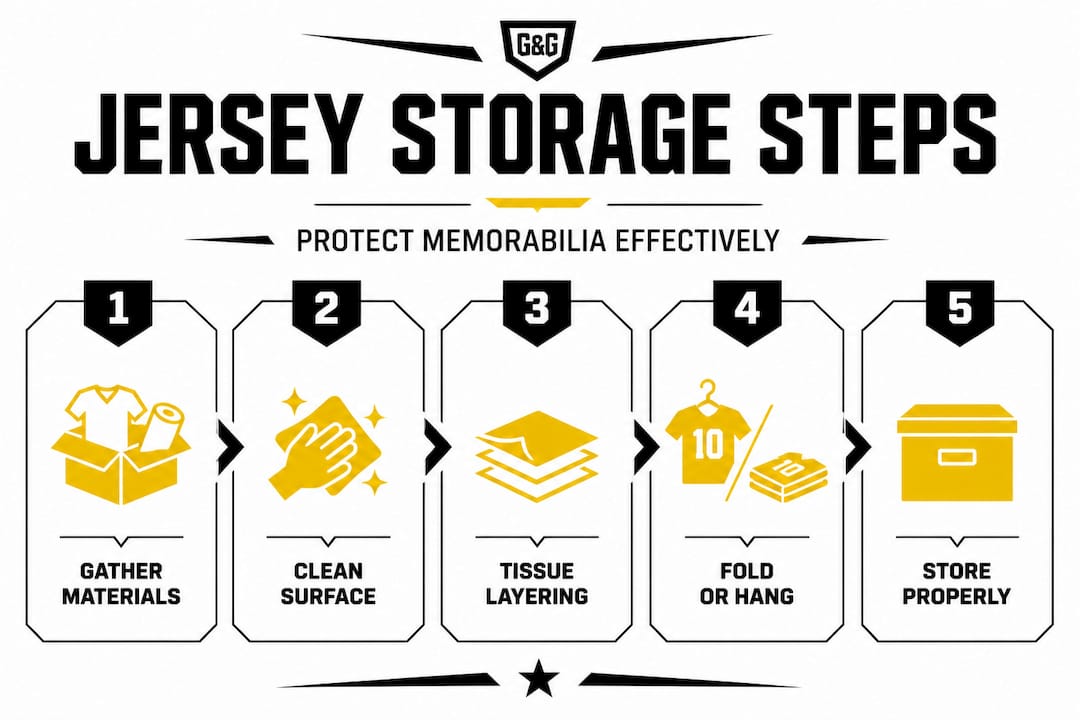
With your materials ready, you can now choose and carry out the best storage technique for your needs. The three main approaches are folding, hanging, and UV-protected framing, and the right choice depends on the jersey’s value, how often you want to see it, and the space you have available.
Folding with acid-free tissue
- Lay the jersey flat on a clean, dry surface, face down.
- Place a sheet of acid-free tissue over any printed or embroidered areas.
- Fold the sleeves inward to the centre of the back panel.
- Fold the jersey lengthways into thirds, placing tissue between each fold.
- Place it flat inside an archive-safe box with a silica pack and seal loosely.
Hanging with padded hangers
- Ensure the jersey is clean and completely dry before hanging.
- Use a padded or wide-shouldered hanger to distribute weight evenly.
- Button or zip any closures to maintain the garment’s shape.
- Keep it inside a breathable cotton garment bag, never plastic.
- Store in a wardrobe away from exterior walls where condensation forms.
UV-protected glass framing
- Choose a frame deep enough to accommodate the jersey without pressing against the glass.
- Mount the jersey on an acid-free foam board using conservation-grade adhesive strips.
- Fit UV-protective glass framing with spacers to keep the fabric away from the surface.
- Hang away from direct sunlight and away from heat sources such as radiators.
- Check the mounting points annually to ensure no sagging has developed.
| Method | Space required | Approximate cost | Risk level | Best suited for |
|---|---|---|---|---|
| Folding | Minimal | Low | Medium if done poorly | Bulk storage, rotation stock |
| Hanging | Moderate | Low to medium | Low with padded hangers | Display, regular-wear pieces |
| Framing | Wall space | Medium to high | Low with proper materials | Signed, rare, or prized jerseys |
The hanging vs folding debate is a genuine one among collectors. Hanging keeps the shape visible and accessible but risks stretching if the hanger is inadequate. Folding saves space and suits long-term archival storage, but the print can stick to itself without tissue paper as a barrier. Choose based on your space constraints and the piece’s value. You can find more context on building a vintage jersey collection to help you prioritise which pieces deserve the most investment in storage. If you are ever unsure whether a jersey is genuinely worth the effort, our guide to spotting jersey quality helps you assess authenticity before committing resources. For broader advice on extending the life of textile pieces, these longevity tips for clothing apply well to sports collectibles.
Pro Tip: For any signed, match-worn, or especially valuable piece, never wash it before storage. Washing removes authentication evidence including DNA traces and can fade or crack signatures. Always wear cotton gloves when handling.
Expert solutions and museum-grade care
If you own especially rare, valuable, or signed jerseys, extra precautions and museum standards come into play. The practices used by professional archivists and heritage organisations are not as inaccessible as they sound, and many can be replicated at home with a modest investment.

UK clubs use acid-free paper, archive boxes, and climate control as baseline standards for preserving football shirts as cultural artefacts. The principles translate directly. A stable temperature between 16°C and 20°C combined with relative humidity between 40% and 55% creates the optimal environment for textile storage. Invest in a small digital hygrometer (a device that measures humidity) to monitor your storage space. They cost very little and remove all guesswork.
For your most valuable pieces, follow these practices:
- Never wash match-worn or signed jerseys. The authenticity and ink are preserved by leaving the garment as found.
- Store flat with acid-free tissue layered between any printed or embroidered sections.
- Always handle with cotton gloves to prevent skin oils from transferring to the fabric or signature.
- Use archive-quality materials exclusively for the box, tissue, and any backing boards.
- Keep documentation such as certificates of authenticity in acid-free sleeves alongside the jersey.
“Proper archival storage treats each jersey as an irreplaceable document of cultural history, not simply a piece of clothing. Every handling decision either preserves or degrades that record.”
Common pitfalls that even experienced collectors fall into include mildew growth caused by poor ventilation, prints sticking together due to storage in polythene without tissue, and document fading when certificates of authenticity are stored in standard plastic wallets. If you want to go deeper on verifying what you own before investing in storage, our guide to authenticating memorabilia is essential reading. Collectors focused on game-worn pieces will also benefit from our specific advice on handling game-worn jerseys. For a detailed look at advanced care for textiles, the principles of conservation science apply directly to sports collectibles.
Troubleshooting and common mistakes to avoid
Even with the best intentions, it is easy to slip up. Here is how to double-check your setup and avoid accidental damage that can be hard or impossible to reverse.
The debate around plastic bins is a good example of where collectors get divided. Plastic bins do a reasonable job of keeping out dust, but without silica packs inside and without leaving the lid slightly ajar for ventilation, they create humid microclimates that encourage mildew. If you use plastic bins, treat them as a first layer of protection, not a complete solution.
The most common mistakes to watch for include:
- Wire hangers left in from dry cleaning, which bite into shoulder seams over time
- Damp storage rooms such as basements, garages, or rooms with single-glazed windows where condensation forms regularly
- Airtight plastic bags without moisture control that trap humidity and create perfect conditions for mildew
- Direct sunlight on displayed jerseys, which fades colours and degrades synthetic fibres even faster than it affects cotton
- Stacking heavy items on top of folded jerseys, which compresses fibres and distorts prints permanently
- Neglecting to check storage conditions seasonally, particularly when central heating switches on in autumn and drops indoor humidity dramatically
Early warning signs of storage damage include faint yellowing along fold lines, a faint musty smell inside storage boxes, visible stretch marks along shoulder seams, and any stickiness when you carefully unfold a jersey. Catching these signs early gives you a chance to intervene before the damage becomes permanent. Understanding the value of vintage jerseys makes it clear why early intervention is worth the effort, particularly for pre-2000s American sports pieces that are increasingly scarce.
Pro Tip: Bring all stored jerseys out of their boxes twice a year, allow them to air in a dry shaded room for a few hours, then repack with fresh silica packs. This single habit prevents the majority of mildew and compression issues collectors face.
Why most collectors underestimate storage—what really protects your jerseys
Here is a truth that most storage guides skip past. The majority of collectors focus on either display aesthetics or bulk convenience. They frame the hero piece and throw the rest in a wardrobe, or they box everything up and forget about it for years. Neither approach reflects what actually keeps jerseys in excellent condition over a decade or more.
The real differentiator is consistency. A jersey stored in a good environment with moderate attention will outlast one stored in a perfect frame that never gets checked. What museums invest in, specifically acid-free materials, UV controls, and handling protocols, works because it is applied systematically, not occasionally. The good news is that replicating this at home is genuinely affordable. A full archival storage kit for a collection of ten jerseys costs less than a single authenticated vintage piece is worth.
If there is one variable never to compromise on, it is humidity and light control. Temperature matters, but humidity and UV exposure are the two factors that cause the most visible, irreversible damage. A jersey stored in a slightly cool room with low humidity and no light exposure will survive decades. The same jersey stored in a bright, warm room with fluctuating humidity will show visible degradation within five years. No framing budget, no matter how generous, compensates for getting these basics wrong.
We also notice that collectors who think about jerseys as wearable culture tend to make better long-term decisions. When a jersey is only ever seen as a display object, it gets staged and forgotten. When it is understood as a piece of living history, the instinct to check on it regularly, rotate its conditions, and handle it respectfully comes naturally. If you want to think about how your collection fits into a wider sense of style and culture, exploring how to incorporate jerseys into streetwear reminds you that these pieces have a life beyond the archive box.
Protect and celebrate your sports memorabilia with Gear & Glory
Knowing how to store your jerseys properly is only half the story. The other half is building a collection worth preserving in the first place.

At Gear & Glory, we specialise in authentic American sports apparel, vintage pieces, and curated collectibles that deserve exactly this level of care. Every item in our range is selected for authenticity and quality, from rare classic vintage sportswear to iconic team caps from every major US league. If you want to complement your jerseys with the right headwear, our selection of authentic US sports caps covers everything from throwback fitted styles to current-season snapbacks. Based in Market Deeping, we are here to help UK fans find standout pieces and look after them properly.
Frequently asked questions
Can I store jerseys in plastic bins?
Plastic bins work reasonably well for dust protection, but only if you include silica packs inside and avoid completely airtight seals that trap moisture.
How do I prevent a jersey’s print from sticking when folded?
Always layer acid-free tissue between folds and over any printed or embroidered sections before placing the jersey into a storage box.
What’s the safest way to display a signed jersey?
Frame it with UV-protective glass and acid-free backing materials, using spacers to keep the fabric from pressing against the glass, and hang it away from direct sunlight.
What can I do if my stored jersey smells musty?
Air it out in a dry, shaded room for several hours, then repack with fresh silica packs. Avoid using any strong cleaning agents on valuable or signed pieces, as these can cause irreversible damage.
Do climate-controlled storage units make a difference for jerseys?
Yes. Controlled temperature and humidity are proven by museum practice to prevent fading, mildew, and fibre degradation over the long term.
Recommended
- NHL jersey authentication: ensure your memorabilia is genuine – Gear&Glory UK
- NFL jersey cleaning guide for UK fans: 5-10 year care – Gear&Glory UK
- Best vintage American sports apparel: must-have examples – Gear&Glory UK
- Why vintage jerseys are iconic: style, culture, value – Gear&Glory UK
- How to Store Robes: Keep Them Fresh, Cozy, and Ready – Lotus Linen