

Limited edition NBA gear: How to spot real value
TL;DR:
- Many “limited edition” NBA collectibles are mass-produced merchandise rather than genuinely scarce items.
- Authentic value depends on verifiable scarcity, provenance, condition, and proper authentication, not just marketing labels.
Walk into any UK sports retailer and you will find racks of gear stamped with “limited edition” in bold lettering. The problem is that label means almost nothing on its own. For NBA enthusiasts building a serious collection, the gap between genuinely scarce, authenticated memorabilia and cleverly marketed mass-produced apparel can represent hundreds, sometimes thousands, of pounds. This guide cuts through the noise to explain what real rarity looks like, which factors actually drive value, and how you can buy with confidence from wherever you are in the UK.
Table of Contents
- What does ‘limited edition’ really mean for NBA gear?
- Key factors that make limited edition gear truly valuable
- Different categories of limited edition gear: A practical breakdown
- How UK collectors can verify and buy wisely
- Why authenticity beats hype: What UK collectors should really value
- Find your next authentic NBA collectible
- Frequently asked questions
Key Takeaways
| Point | Details |
|---|---|
| Not all ‘limited’ is rare | Marketing terms alone do not guarantee true scarcity or collector value for NBA gear. |
| Authenticity is essential | Genuine collectables come with proof such as holograms, certificates, and clear provenance. |
| Know gear categories | Game-worn, autographs, patches, and digital items follow different standards and hold different values. |
| Verify before buying | Always check for serial numbers, recognised authentication, and trusted sources before purchasing. |
| Value UK-specific guidance | Collector strategies for NBA gear in the UK market rely on evidence-backed checks and local expertise. |
What does ‘limited edition’ really mean for NBA gear?
The phrase “limited edition” first appeared on fine art prints in the nineteenth century, where an artist would number each piece by hand. Today it has spread so widely across consumer products that it has lost much of its original meaning. In the NBA collectibles world, the term covers an enormous range of items, from a one-of-a-kind game-worn jersey worn by LeBron James in a playoff game to a mass-retail T-shirt with a badge that reads “limited run” somewhere near the hem.
Understanding the label requires understanding NBA merchandise terminology before you spend a single penny. In practical terms, the NBA collectibles market divides its limited edition output into several distinct categories:
- Game-worn jerseys and shorts — authenticated items actually worn during official NBA competition, often with league-issued holograms
- Autographed items — balls, photos, jerseys, and boots signed by players, typically accompanied by a certificate of authenticity (COA)
- Commemorative patches and trading cards — physical inserts with embedded jersey swatches or patches cut from actual game gear
- Digital moments and NFTs — blockchain-based video highlights with fixed mint counts, as issued through platforms such as NBA Top Shot
Each category carries its own standards for scarcity and authentication. A jersey patch numbered to 10 copies means something completely different to a retail jersey labelled “limited edition” with a production run of 50,000 units.
Scarcity is a deliberate design even for digital NBA collectibles, with mint counts and tier structures underpinning rarity in the same way serialisation does for physical memorabilia.
The danger for UK collectors is that marketing teams understand the emotional pull of the word “limited.” They apply it broadly, knowing fans will respond. Real scarcity requires a verifiable, fixed edition size with no possibility of reprinting or reminting. If a retailer cannot tell you the exact production number, treat that as a warning sign rather than a reason to rush your purchase.
Key factors that make limited edition gear truly valuable
Once you understand how the label is used, the next step is learning which specific factors separate genuinely valuable gear from well-packaged merchandise. Auction value depends heavily on authenticity, provenance, condition, and rarity, not just a limited edition label. That principle guides every serious collector and auction house in the UK market.
Here are the main steps UK collectors should follow when evaluating a piece:
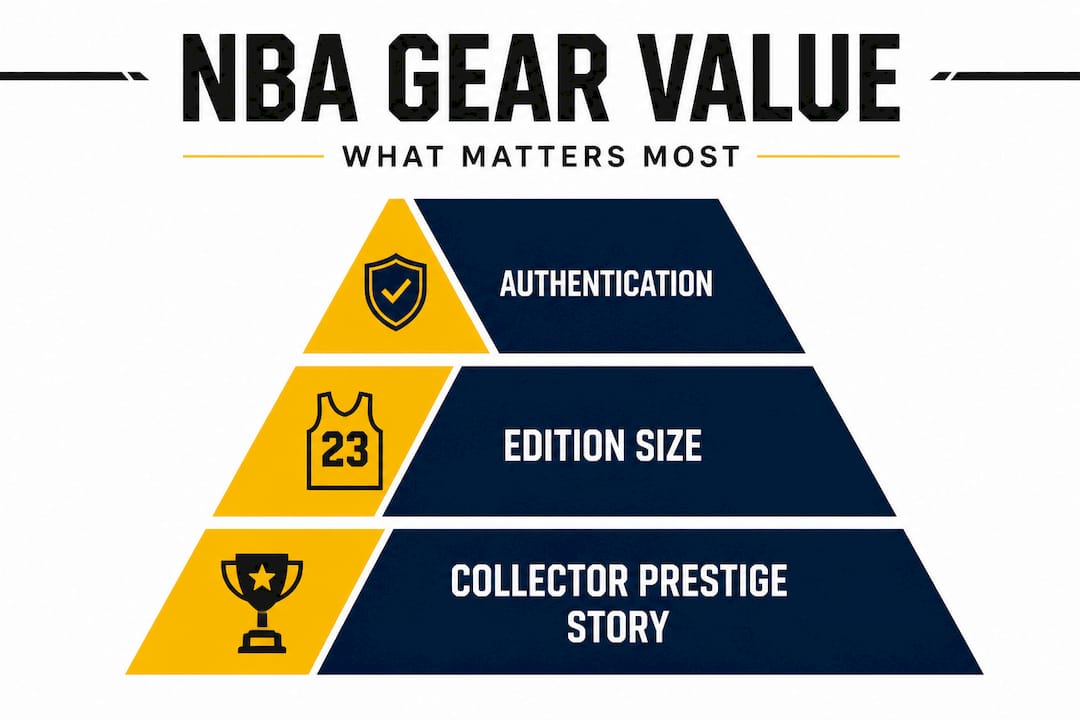
- Confirm the exact edition size. A numbered piece marked “23 of 100” is meaningfully scarce. If no number exists, the run size is almost certainly much larger than the marketing implies.
- Check for official authentication. Look for tamper-evident holograms and authentication programmes that are standard for top NBA collectibles, such as those used by Sotheby’s for game-worn jersey releases.
- Research provenance. Provenance means the documented history of an item: who wore it, in which game, and how it passed from the court to your hands. A jersey with photomatching evidence, match reports, and a chain-of-custody document is worth considerably more than an equivalent jersey with only a hologram sticker.
- Assess condition carefully. Game-worn items show natural wear, but damage beyond expected use reduces value. For trading cards, grading services such as PSA and Beckett provide standardised condition scores that UK buyers and sellers recognise.
- Understand what makes NBA apparel rare in market terms. Retirement seasons, championship years, record-breaking performances, and player deaths all create spikes in demand that amplify the value of already scarce items.
Pro Tip: Authentication documentation is more important than any marketing term. A jersey from a fringe player, authenticated as genuinely game-worn with photomatching evidence, will often command a higher price than a superstar’s replica labelled “exclusive” without supporting paperwork.
The table below summarises how the main types of NBA limited edition gear compare across the metrics that matter most to collectors.
| Category | Typical value range | Authentication standard | Collector prestige | Buyer risk |
|---|---|---|---|---|
| Game-worn jersey | Very high | NBA/LOA hologram, photomatching | Highest | Low if properly authenticated |
| Autographed item | Medium to high | COA, third-party witness | High | Medium (forgeries exist) |
| Commemorative patch/card | Low to medium | Grading service (PSA, Beckett) | Medium | Low to medium |
| Digital moment (NFT) | Variable | Blockchain, platform mint count | Growing | Medium to high |
| Retail “limited edition” | Low | Usually none | Low | High |
Exploring game-worn NBA apparel in depth will give you a clearer picture of exactly what authenticated game-worn provenance looks like in practice before you commit to a significant purchase.
Different categories of limited edition gear: A practical breakdown
Knowing the theory is useful. Applying it to specific categories is where UK collectors gain a real advantage. The “limited edition” label appears on everything from commemorative patches celebrating LeBron James’s 23rd NBA season to digital moments and mass-retail specials, but real collector value depends on authentication standards and category norms.
Here is how each main category works in practice:
Game-worn and game-issued jerseys sit at the top of the prestige ladder. These go through NBA equipment rooms, are tracked by team staff, and are authenticated through programmes run by the league itself or trusted third parties. A single game-worn Giannis Antetokounmpo jersey from a Finals appearance is a genuinely finite object. There is one of it. That scarcity is absolute.
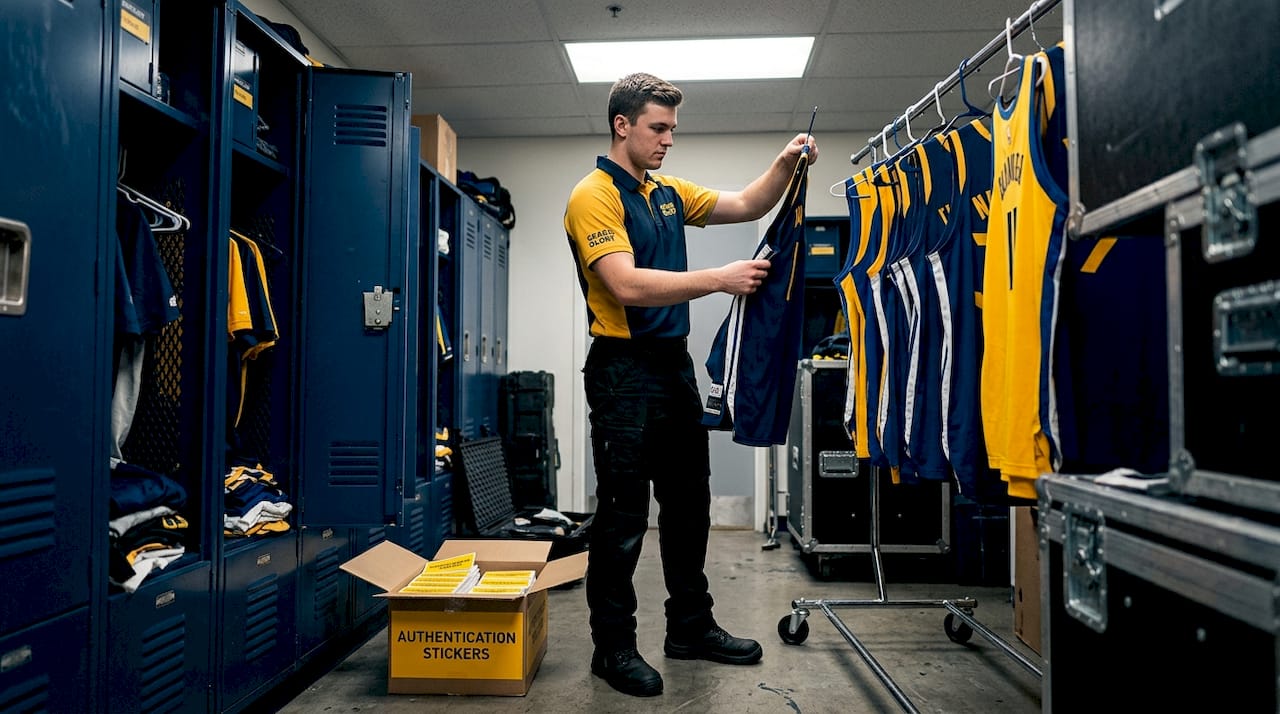
Autographed items are more numerous but still valuable when authenticated correctly. The biggest risk is forgery. Signatures obtained privately, without a third-party witness or a recognised COA provider, carry significant fraud risk in the secondary market. UK auction houses and platforms such as eBay’s VeRO programme take authenticity claims seriously, but the burden of proof falls on the buyer.
Trading cards with jersey patches or memorabilia swatches occupy an interesting middle ground. Products like Panini Prizm or Topps Finest number their top-tier cards to as few as one copy. The embedded swatch may or may not be from a specific game, and the card’s grade significantly affects its resale value.
Digital moments are the newest category. Their scarcity is mathematically enforced by blockchain technology, so a moment with a mint count of 50 genuinely cannot be duplicated.
Retail limited editions are the category requiring the most scepticism. These are often fashion items marketed to fans rather than true collectibles. Consider NBA replica explained resources before you purchase any retail jersey presented as collectible.
Quick signs that help you distinguish genuinely valuable items from ordinary limited edition gear:
- A visible serial number printed or embroidered directly on the item
- Official hologram stickers from the NBA, PSA, Beckett, or recognised auction houses
- Accompanying documentation with match details, player confirmation, and photographic evidence
- Items sourced from recognised provenance channels such as major auction houses, estate sales, or direct team releases
| Type | Authentication standard | Risk level | Typical edition indicator |
|---|---|---|---|
| Game-worn jersey | NBA hologram, photomatching | Low | Unique or single item |
| Autographed memorabilia | COA, witness-verified | Medium | Variable |
| Patch/swatch trading card | Grading service | Low to medium | Numbered on card front |
| Digital moment | Blockchain mint count | Medium | Fixed number on platform |
| Retail “limited edition” | None standard | High | Often unstated or large |
How UK collectors can verify and buy wisely
Understanding categories and value drivers is only half the work. The practical side, actually verifying what you are buying, is where many collectors have come unstuck. Here is a step-by-step approach built specifically for the UK secondary market.
- Request full documentation before payment. For physical items, this means a COA, hologram serial number, and any provenance paperwork. Do not accept verbal assurances.
- Cross-reference serial numbers. Most major authentication bodies maintain databases. PSA, Beckett, and the NBA’s own authentication scheme allow you to verify hologram codes online. If the serial number does not appear in the database, walk away.
- Research the seller. UK auction houses with established sporting memorabilia departments will stake their reputation on every lot they handle. Private sellers on secondary platforms require considerably more due diligence.
- Use photomatching services for game-worn claims. Photomatching involves comparing the item against broadcast footage and photography from the game in question. Services specialising in this work can confirm or refute a game-worn claim with high accuracy.
- For digital collectibles, verify on-chain. NBA Top Shot moments can be verified directly on the platform. Check that the mint number matches what the seller claims and that the account history looks consistent.
- Consult communities. UK-based NBA collector communities on Reddit, Discord, and specialist forums carry a wealth of collective knowledge. Experienced collectors can often spot red flags that a newer buyer might miss.
Pro Tip: Be especially cautious about purchasing “limited edition” fashion releases as investment-grade collectibles. Brands regularly use the terminology to create urgency around streetwear drops. Understanding NBA licensed apparel helps you separate official licensing from genuine collectible scarcity.
Authenticity standards recognised by UK auction houses and respected by the collector community include:
- PSA (Professional Sports Authenticator) grading and authentication
- Beckett Authentication Services (BAS)
- James Spence Authentication (JSA) for autographs
- NBA official game-worn authentication programme
- Sotheby’s and Christie’s in-house authentication for high-value memorabilia
Understanding NBA jersey brands is also useful context when assessing whether a specific product was manufactured to collectible standards or retail standards in the first place.
Why authenticity beats hype: What UK collectors should really value
We have seen a pattern repeat itself across the UK collector community over the years. Someone sees a “limited edition” release from a major brand, feels the urgency created by a countdown timer or a low-stock alert, buys quickly, and later discovers the item has little secondary market demand. That experience is frustrating and expensive.
The pieces that hold meaning, and hold value, are always the ones with a clear story. An authenticated game-worn jersey from a specific night, a numbered autograph obtained at a verified signing session, a trading card with documented chain of custody: these items carry weight because they represent something real. The marketing did not create the scarcity. The scarcity was already there.
There is also a personal satisfaction argument that we think gets undervalued in these conversations. Knowing that you own something provably genuine, something that was physically present at a moment in NBA history, adds depth to a collection that no amount of marketing copy can manufacture. Reading about why collect NBA jerseys often reveals that the most passionate collectors are motivated by this connection to the game itself, not by resale potential.
Our honest take is this: develop your collector’s eye by studying authenticated pieces, not by reading promotional descriptions. Look at examples from reputable auction results. Learn what a genuine hologram looks like. Understand which players’ items consistently hold value and why. That knowledge, built steadily over time, will serve you far better than reacting to any individual drop or limited-time offer.
The contrast between marketing-driven purchasing and provenance-driven purchasing is stark in the long run. Hype fades. A documented, authenticated piece from a meaningful moment in NBA history does not.
Find your next authentic NBA collectible
At Gear & Glory, we understand that building a collection you are truly proud of means sourcing pieces with real authenticity behind them, not just a label.
Our range of NBA jerseys spans modern Nike releases through to sought-after vintage styles, with a focus on pieces that reflect genuine NBA culture. If you are drawn to the history and aesthetic of the game’s earlier decades, our vintage clothing collection is worth exploring for rare finds with genuine provenance. Every piece we stock reflects our commitment to quality, authenticity, and bringing the best of US sports culture to fans across the UK. Start building your collection with the confidence that comes from buying through a source that takes these standards seriously.
Frequently asked questions
Does ‘limited edition’ always mean an NBA item is rare or valuable?
No. Real collector value relies on authentication, provenance, and a verifiable edition size. Auction value depends on authenticity and rarity, not the label alone.
How can I tell if my NBA jersey is a genuine limited edition piece?
Check for a visible serial number, tamper-evident holograms issued by the NBA or a recognised authentication body, and a certificate of authenticity with verifiable documentation.
What types of limited edition NBA gear are available to UK collectors?
Game-worn jerseys, autographed memorabilia, trading cards with jersey patches, and digital NBA moments with fixed mint counts are all available to UK buyers through auction houses, specialist retailers, and digital platforms.
Are digital NBA moments with fixed mint counts really worth collecting?
Some digital moments carry genuine scarcity and verifiable authentication. Digital NBA collectibles use mint counts and tier structures to enforce rarity, making the most sought-after moments legitimately scarce and appealing to modern collectors.
Recommended
- What makes NBA apparel rare? A UK collector’s guide – Gear&Glory UK
- Why collect NBA jerseys: the ultimate guide for UK fans – Gear&Glory UK
- NBA jersey brands: style, authenticity and what UK fans need to know – Gear&Glory UK
- NBA replica explained: UK fan’s guide to jerseys & authenticity – Gear&Glory UK
- Limited Edition Footwear: Hype, Value & Streetwear Identity – Dracoslides